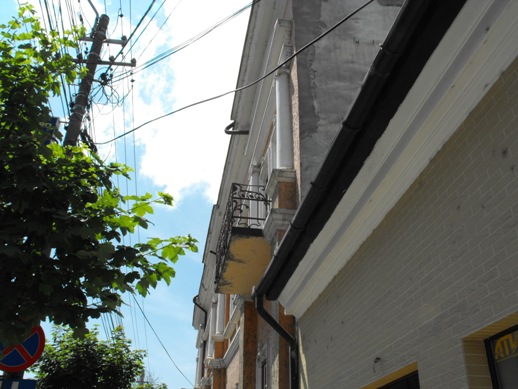
Târgu-Mureş - Secession details


Şugău Cave

The Șugău Cave is located n the Giurgeului Mountain, 1568 metres above sea level, on Șugău Creek, flowing out from the cave. The creek is fed by the karst water gathered in the mountain. One can come close to the cave from the Voșlăbeni village, on the road Gheorgheni - Miercurea Ciuc.


Vizualizare hartă mărită

The Șugău cave was formed 65 million years ago, in the Paleocene Period, as a result of folding movements. The spatial position of the cave system is characterized by tectonic pre-formation. The multi-level passage of the cave was formed along the lithoclasses and faults of the dolomite, granular limestone, in mezo-metamorphic crystalline shale sequence of the Rebra series. The granular limestone, along which the passage was formed, requires an exact, specialized identification, as at the mouth of the creek there is no more limestone, its place was taken by crystalline shale up to the summit.


The cave is divided into 4 large galleries: dry passages 1 and 2, which were formerly seepage, the "Túlfolyó-brach", and aqueous passage, active even nowadays. The dry passage 1 is supplied with iron door, it can be visited, but it needs renovation. The first hall is the "Dressing room", it is a recess similar to a domed cellar. Here shifted their clothes the speleologists in the period before the hospice was built. The next hall is the "Conference Room", which in 1965 carrying out alluvial deposits made way for itself in the direction of the larger halls. In this hall can be seen drip-stones. On the ceiling of the hall can be seen the snow-white, mild drip-stone deposit, called lublinite (mountain milk, rock milk). Some metres further from there can be found cauldron like forms: "The Giant Owl Eye" and "The Mother-in-Law's Mouth". On the right inwards can be seen "The Fairyland Passage"; for its walls are characteristic the stalactites. The "Bastion" is the largest stalagmite of the cave; next to it is the "Mouth of the Wolf". In the stalagmite encrustation can be found the "Altar" and the "Pagoda". The stalagmites of the Șugău cave are postgenomic, that is to say they developed after the formation of the cave recess. Its base material is calcite and aragonite.


There can be found also halls and formations such as the "Whirlpool Hall", the "Connecting Passage", "Miklós Hall", the "Triumphal Arch" and the "Bat Boneyard", the "Petrified Waterfall", the "Stalactite Cemetery", the "Concert Hall". The largest hall of the cave is the "Large Hall". A sharp descent leads in the direction of its base, from there starts a low passage towards the lower levels. In the lower part of its wall calcite crystallines can be found. Downwards from this hall we find the "Crystalline chimney", which walls are covered with crystalline.


The most mysterious and the most studied passage of the cave is the "Aqueous Section". This active passage is the most difficult passable section of the cave. The average water output of the creek, which flow over the cave, is 30 l/sec. The water temperature, in comparison with other cave creeks, is very low 5-7 centigrade degrees. Leaving the mouth, one can follow the creek along 40 m inwards. On the right there are very dangerous and slippy avens. This passage is a large tectonical faultage, which walls moved away from each other, forming a joint. It is worth mentioning the "Lamp Cemetery", which is a vertical shaft, and it is the most important part of the joint. An interesting formation of the lublinite precipitate is the "Stalactite Sources".


The excavated soil and debris during the exploration aggraded the creek, so only in one passage can be followed its flow. Our pass on is obstructed by a water trap. The other by-pass passage is also blocked by water. On the left, before the water trap a stalactite flow hangs on the wall.


The atmosphere is rich in carbon dioxide. Due to the low temperature inside, the humidity level of the Șugău cave is 95%. The cave water contains a large amount of calcium carbonate. Despite the hostile conditions the cave has a small fauna, which consists of the Froglobion-family: springtails (Collembola), insects (Insecta).


The cave's only inhabitant are some species of bat: Myottis Natererri, which shoes up especially in winter time, single or in a group, settle down on the dry walls or on the ceiling of the cave; Greater mouse-eared bat (Myotis Myotis), Lesser mouse-eared bat (Myotis Blythi), Brown long-eared bat (Plecotus Auritus), Long fingered bat (Miniorterus schreibersi).

Adapted from here.

Şugău Gorges

The Cheile Bicazului-Hăşmaş National Park (Bicaz Gorges - Hăşmaş Mountain) is located in north-eastern Romania, in the Eastern Carpathians. The reservation territory is part of Neamţ and Harghita counties. The parks area of 6575 ha is divided into two zones: the special conservation zone (78%), and the protection zone (22%). On the territory of the National Park there are some natural reserves, such as Şugău Gorges.


True open-air museum, Şugău Gorges Natural Reserve is located at the southern edge of Munticelu Massif and can be individualized with a unique landscape and an exceptional natural heritage. Şugău River has carved 350 m long gorges, very narrow (2-3 m wide), and forms a row of waterfalls.


The reserve has a surface of 90 ha; the coordinates of its center are 46gr 51’ N and 25gr 48’E and its highest point has an altitude of 1381 m (Munticelu-Şugău Rock Crest).


The reserve represents an exceptional natural site due to the uniqueness of available natural heritage. Its geology is extremely interesting in terms of tectonic-structural (fractures, tectonic contacts, blades of over-thrust), paleontological (Mesozoic fossils) and petrographic (accumulations of tuff, travertine, limestone of different ages).


The gorges are spectacular due to the reference landscape elements (limestone and karst terrain, vertical walls, limestone towers, narrow gorges, marmite erosion, caves, avens, springs, sinkholes, karst saddles, clints), flora (endemic species, sub-alpine meadows developed on limestone, calcareous screes and slopes specific vegetation, forests of Pinus sylvestris - glacier relic), fauna (chamois, lynx, wild cats, bats, birds, reptiles, amphibians, insects, mollusks) and characterized by rarity or uniqueness.


The Natural Reserve was declared Site of Community Importance under European legislation and will be integrated into the international network of protected areas Natura 2000. Custodian of the protected area is a Romanian Mountain Club (led by Ticu Lăcătuşu), with administrative headquarters in ECOLOGIC Chalet.

Rodrig Goliescu

Rodrig Goliescu (1882–1942) was a Romanian inventor, engineer, and Lieutenant, who built the Avioplan, the first airplane with a tubular fuselage. The model, with a length of 1.2 m was successfully tested in 1909, having a take off angle of 30 degrees. The originality of this aircraft was the shape of the fuselage, designed for minimum drag and acting as a tube fan, similar to the way the modern vertical take off aircraft and helicopters are designed.


This shape reduced drag and increased the efficiency of the propeller. Helped by the Minister of Education, Spiru Haret, who also helped Aurel Vlaicu, in 1909 he went to France to acquire an engine for his aircraft. In Paris he sent a survey "Laws of air dynamics" to the French Academy, study that was published in "La France automobile et aérienne" magazine, on 15 May 1909. Goliescu patented his invention in France (patent no. 402329). In the same year he learned to fly and he built an updated version of his aircraft, this time in full size. The aircraft had a half cylinder fuselage, but still the air from the propeller flowed through as in the first model. He flies with his aircraft for the first time, in November 1909, on Juvisy airfield, near Paris, and he reaches an altitude of about 50 m. It was for the first time to fly an aircraft with a tubed propeller. Between 1932 and 1936 he flight tested his Aviocoleopter, the first aircraft to have a toroidal wing.


After his flights, only in 1932, the Italian engineer Luigi Stipa will build an aircraft with a "barrel fuselage" under the name of Stipa-Caproni but the concept will reach its dedication after the Second World War, being successfully implemented in helicopters like SA-365 Dauphin, RAH-66 Comanche or the new X-35 fighter.

Sources: Wikipedia, Early Aviators.

Georges de Bellio

George Bellu (February 20, 1828 - January 26, 1894) was a Romanian aristocrat, art collector and protector of the Impressionists.


He left Romania in 1851, attracted to the art and culture of Paris. He would therefore discover France when the country was under the Second Republic and then under the Second Empire, and decided to stay there for good. His new name would thus be Georges de Bellio. In Paris, he became a homeopathic physician, he worked at the Hahnemann Hospital in Paris, and he was a member of the Société Médicale Homeopathique de France.


Georges de Bellio came from a rich family, so he had the means and time to dedicate himself to his greatest passion - art collecting. At an early stage, this collection was fascinating mainly due to it's eclectic nature, as Georges de Bellio seemed to try to learn everything there was to know about art and to find those themes and artists that pleased him the most. He was one of the best collectors of the 19th century, managing to amass a huge and varied collection, that brought together impressionist, 18th century French, Italian and Flemish works, of great quality and finesse.


After a short while, the collector discovered with awe the works of contemporary artists, mainly the Impressionists, which suited his taste just fine. In time he even became a friend and enthusiastic supporter of artists like Renoir, Sisley, Pissarro, buying several canvases directly from them and "hunting" their best works at exhibitions and auctions. He began to buy paintings by the then unknown Impressionist School, and he had paintings by Pierre Auguste Renoir, Edouard Manet, Claude Monet, Berthe Morisot, Alfred Sisley and Camille Pissarro in his collection.


Not doubt some these paintings were given in lieu of payment for his homeopathic treatment, a common practice at the time, but Bellio often paid for paintings to help out these struggling painters when they were close to destitution and he would frequently treat them as patients for no fee at all. Giovanni Boldini painted his portrait in 1894, and Pierre Auguste Renoir painted his daughter Victorine de Bellio in 1892.


Georges de Bellio was, above all, the first amateur to be a part of the so-called Impressionist art collectors, alongside Caillebotte, Duret and others. Over time, the sheer number of works in his collection surpassed the space that he had in his small apartment. So the passionate collector was forced to rent a small shop, where he exhibited the works of his favorite artists to his friends - Sisley, Monet, Mallarme, Geffroy and others. Most of these works were later donated to the Fine Arts Academy in Paris in 1957, by the artist's daughter.

Dumitru Fărcaş

Dumitru Fărcaş (born 12 May 1938, Groşii Băii Mari, Maramureş County, Romania) is a Romanian tárogató player. He played the instrument on all major stages in the world and made the tárogató known all over the world.


His father played the pipe, and his older brothers played the clarinet. He studied the oboe at the Gheorghe Dima Music Academy in Cluj-Napoca. Dumitru Fărcaş began his professional career in 1960 when he was hired as an instrumentalist in the "Maramureş" Ensemble in Baia Mare.


In 1962 he founded the "Mărţişorul" Folk Music Orchestra, belonging to the House of Culture of Students from Cluj-Napoca, with which has received many national and international awards, among which: First Prize Winner and the Laureate of the World Festival of Youth and Students, Helsinki (1962), Gold Disc awarded by the Charles Cros Music Academy in Paris (1972), Laureate of "Ethnos" Prize (1991), winner of the "Folklive" Smithsonian Festival, Washington (1999), First Prize at the International Festival Brussels (1999), Inter-Lyra Award in the Music and Dance Olympics "Five Lyre", Budapest (2000).


He was made Honorary Citizen of the cities Cluj-Napoca, Bucharest, Reşiţa and Baia Mare, as well as Pyongyang.


In 2008 he was awarded Doctor Honoris Causa by the Gheorghe Dima Music Academy.


Alexandru Ţitruş

Alexandru Ţitruş (March 3, 1922 - May 5, 1989), was a famous Romanian folklore performer, a violin virtuoso.


He was born in Unirea, Ocna-Mureş, Alba County, in a modest family with nine children. He began playing at 6 years old in the instrumental group composed of his father and brothers. Because Alexandru was the youngest, his father decided that he had to play at dulcimer, the violin being entrusted to Nicolae, the elder brother. In this formula, the Ţitruş family sang at weddings and various parties. But Alexandru loved the violin, and at 8 years old he stole the instrument of his brother and practiced hidden in the cemetery old songs heard from the elders.


At fourteen, he decided to go to Bucharest, where, by happy chance, manages to realize his first audio recording at Radio Bucharest. Then he returned in Ocna-Mureş and continued to sing with his father and brothers. Alexandru married at the age of eighteen.


For a while he sang with "Doina" Ensemble of the Army of Bucharest, led by general Dinu Stelian, then in 1963 he established in Cluj, where he was employed for a period in the Popular Music Orchestra of the State Philharmonic "Transylvania".


Being endowed with an amazing talent, Alexander Ţitruş had collaborations with famous conductors including Radu Simion, Toni Iordache, and with renowned orchestras, with which recorded remarkable achievements in all concerts at home and abroad. He recorded four LP and a MC at Electrecord.


Due to his unique style of interpretation, Alexandru Ţitruş was considered the greatest violin player of the folklore of Mureş area and Transylvania. He died prematurely, at only 67 years.