Sâmburești vineyards

Among the most reputed wine-growing zone in Romania for red wines, also goes in for the vineyard Sâmbureşti, placed in the north of Olt County. Sâmbureşti vineyard is situated in the left side of Olt River, at the intersection of the parallel 44°48' with the meridian 24°24’; designate a geographical position most favorable for grape wine culture. The wine-growing zone Sâmbureşti belongs to Getic plateau, specifically Cotmeana piedmont, situated between Olt Valley (at west) and Argeş Valley (to east). In this zone exist many hundred of hectare cultivated with red wines grapes and this products are more and more request on the export.


Vizualizare hartă mărită


Breviaries mentioned its name four hundred years ago when it was found in the possession of Theodosie Rudeanu, a great boyar, logothete, historian, diplomat and strategist, called "the most profound statesman of the Romanian boyars at the time", the right hand of Michael the Brave. Breviaries tells that wine was produced here even then, describing the subtleties of the cup bearer position in 1638. Over the years, the land had notable owners: the nephew of Dan Danilovici, the Lord High Treasurer of Matei Basarab, then Constantin Brâncoveanu's son-in-law and, around 1800, it became the property of the Brătianu family.


In 1906, Vintilă Brătianu hired August Joseph Ville, one of the most well-known oenologists in France, to recover the vineyards on his lands in Florica, Drăgăşani and Sâmbureşti. In 1893, he leaved France permanently as, on the Romanian Government's request, the French State gives him the mission to help Romania recover vineyards destroyed by phylloxera. He bringed Muscat Ottonel, Merlot and some other wine varieties into the country for the first time, then he started breeding and spreading them.


On the occasion of the apportionment of property in 1945 (a prelude to the collectivization to come), excluding the estates that entered the peasants' possession, part of the lands became the property of the State and formed the AFSMs (Administration of State Farms and Machinery Parking). In 1949, the collectivization turned the former property of Vintilă Brătianu into G.A.S. Sâmbureşti, owner of more than 70 ha of orchards, 40 ha of vineyards and 300 ha of woods. The Wine Preparation Complex from Sâmbureşti and the Wine Research Centre were built in the eighties. In 2005, Jean Valvis, the builder of Dorna and LaDorna brands, takes over Sâmbureşti vineyards and revives the old traditions of those places.


The high quality of the red wines from Sâmbureşti was pointed put long time ago in some didactic papers. However, systematic studies concerning the potentialities of this wine-growing zone were initiated only in 1992. Always seated next to the most powerful (it was the high class protocol wine under the communist regime; it is said that it was Stalin's favorite wine), the Sâmbureşti wine has never lost its noble origins, thanks to the people that cherished and respected it. At Sâmbureşti, one will not only find the most famous international varieties (Cabernet Sauvignon, Sauvignon Blanc, Chardonnay, Merlot), but also the oldest and noblest Romanian ones (Fetească Regală, Fetească Albă, Fetească Neagră).

Infos and photos from here and here.

Romania at World Cup

The World Football Championship was created at the initiative of FIFA president Jules Rimet after successful football tournament at the Olympics. On May 28, 1928, the FIFA Congress in Amsterdam decided to Uruguay to conduct the first such competition. The national football team of Romania has participated at seven World Cup final tournaments.

Uruguay, 1930
The first World Football Championship, Copa del Mundo (World Cup), was hosted by Uruguay, Olympic champion in 1924 and 1928, which in 1930 celebrated one hundred years of independence. There were no preliminaries, all national football teams received invitations to participate. Romania was the first European country to announce its participation in the tournament. The 13 national teams were distributed in 4 groups, the winners of each group qualifying in semi-finals. Romania was in the 3rd group, along with Peru and Uruguay.

Peru - Romania 1-3 (for Romania scored Adalbert Deşu 1' - the fastest goal of the competition, Constantin Stanciu, Ştefan Barbu 85')
Uruguay - Romania 4-0

Uruguay won the World Cup, Romania was on the 8th place.

Jules Rimet Cup

Italy, 1934
Romania was qualified in a group with Swiss and Yugoslavia. In the eighths, Romania was defeated by Czechoslovakia, the finalist of the competition.

Czechoslovakia - Romania 2-1 (Puc, Nejedly - Ştefan Dobay)

Italy won the World Cup, Romania was on the 12th place.

Ştefan Dobay

France, 1938
Romania qualified by default for the 1938 World Cup after their qualifying playoff opponents Egypt withdrew. They suffered a shock defeat in the finals in France, losing to minnows Cuba, who, like Romania, had only qualified due to the withdrawal of their qualifying opponents, USA. The first match at the Stade Chapou in Toulouse ended 3–3 after extra time, but Cuba won the replay four days later 2–1.

Italy won the World Cup, Romania was on the 11th place.

Mexico, 1970
Romania was in Group 3 with England, Brazil and Czechoslovakia.

England - Romania 1-0 (Geoff Hurst)
Czechoslovakia - Romania 1-2 (Ladislav Petráš - Alexandru Neagu, Florea Dumitrache)
Brazil - Romania 3-2 (Pelé twice, Jairzinho - Florea Dumitrache, Emerich Dembrowski)

Brazil won the World Cup, Romania was on the 11th place.

Florea Dumitrache

Italy, 1990
Romania was in a group along with Argentina (the world champion), USSR (the vice-european champion), and Cameroon.

USSR - Romania 0-2 (Marius Lăcătuş twice)
Cameroon - Romania 2-0 (Roger Milla twice)
Argentina - Romania 1-1 (Pedro Monzón - Gavrilă Balint)

Second round
Ireland - Romania 0-0 (Ireland qualified at penalty shots)

West Germany won the World Cup.

Gheorghe Hagi

USA, 1994
Romania was in a group along with Colombia, Switzerland, and USA.

Colombia - Romania 1-3 (Adolfo Valencia - Florin Radu Răducioiu twice, Gheorghe Hagi)
Switzerland - Romania 4-1
USA - Romania 0-1 (Dan Petrescu)

Round of 8
Argentina - Romania 2-3 (Gabriel Batistuta, Abel Balbo - Ilie Dumitrescu twice, Gheorghe Hagi)

Quarter-finals
Sweden - Romania 2-2 (Brolin, Roland Nilsson - Florin Radu Răducioiu twice). Sweden qualified at penalty shots.

Brazil won the World Cup, Romania was on the 6th place.

Florin Radu Răducioiu

France, 1998
Romania was in a group along with Colombia, England, and Tunisia.

Colombia - Romania 0-1 (Adrian Ilie)
England - Romania 1-2 (Michael Owen - Viorel Moldovan, Dan Petrescu)
Tunisia - Romania 1-1 (Skander Souayah - Viorel Moldovan)

Round of 16
Croatia - Romania 2-0 (Davor Šuker twice)

France won the World Cup, Romania was on the 11th place.

Viorel Moldovan

Romania under waters

During the devastating floods in Romania over the past two weeks, at least 23 people lost their lives and over 2,300 homes were destroyed and thousands have been evacuated from their homes. The devastation also extended to many roads, bridges, railway tracks, as well as gas and water pipes. The total damage suffered throughout the country is estimated at over one billion euros.


Interior Minister says there has not yet been a damage assessment as the floods are still critical, especially on the Siret River in northern and eastern Romania, but that losses could exceed 0.6 per cent of gross domestic product. Also, the Danube has exceeded the highest levels recorded in 2006 around the towns of Galaţi and Brăila. Interior Minister recently said that procedures have been started to tap into the EU Solidarity Fund, which can be accessed in case of force majeure if damages sustained exceed EUR3 billion, which is not the case of Romania, or if damages exceed 0.6% of gross domestic product, where Romania qualifies. The minister said Romania could get EUR75 million relief from the fund.


Romania officially asked for help on 2 July. Romania's request for assistance was immediately communicated to all EU countries via the Commission's Monitoring and Information Centre (MIC). Some EU countries (Austria, Belgium, Estonia, France) already sent assistance to flood-hit Romania. Some Romanian NGO have starteda humanitarian campaigns to support the victims of the disaster, collecting funds and objects. Help! Donate! Support!

Romanian musical week-end

Classical, Rock, Folklore, Jazz, Folk. Just listen...


Edelweiss

Edelweiss (Latin: Leontopodium alpinum Cass., Romanian: Floarea reginei or Floarea de colţ), is one of the best-known European mountain flowers, belonging to the sunflower family (Asteraceae). The name comes from German edel (meaning noble) and weiss (meaning white). The scientific name, Leontopodium, means "lion's paw" and is derived from the Greek words leon (lion) and podion (diminutive of pous, foot).


Leaves and flowers are covered with white hairs and appear woolly (tomentose). Flowering stalks of Edelweiss can grow to a size of 3–20 cm (in cultivation, up to 40 cm). Each bloom consisting of five to six small yellow flower heads (5 mm) surrounded by leaflets in star form. The flowers are in bloom between July and September. The plant is unequally distributed and prefers rocky limestone places at 2000–2900 m altitude. Since it usually grows in inaccessible places, it is associated in many countries of the alpine region with mountaineering. Its white colour is considered a symbol of purity, and holds a Latin as well as Romanian name, floarea reginei (Queen's flower).


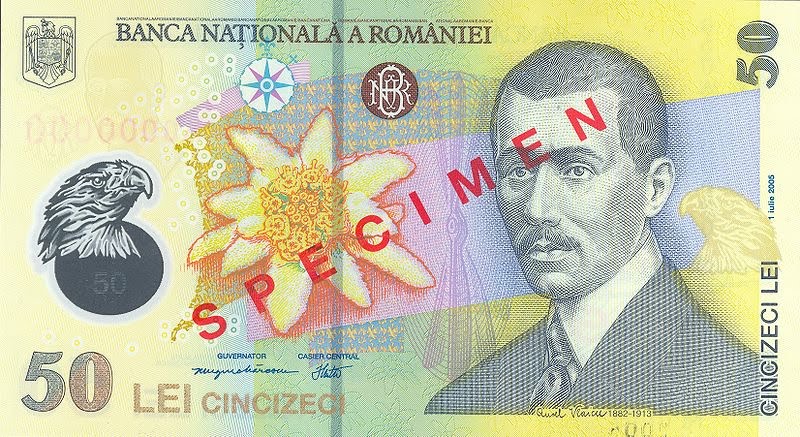
Edelweiss is a protected plant in many countries, including Romania (since 1933). It appears on the Romanian 50 Lei banknote. In Romania, floarea de colţ grows in Maramureşului and Rodnei Mountains, Obcinele Bucovinei, Rarău, Ceahlău, Ciucaş, Bucegi, Făgăraş, Cozia şi Retezat Mountains.

From Wikipedia.

Piatra Craiului National Park

Piatra Craiului (Rock of the King) Massif was declared as natural reserve on 28 of March 1938 (Official Journal no. 645). The Ministry Council took this decision "due to the unique character of the massif, where rare species like: Dianthus callizonus, Hesperis nivea, Minuartia transilvanica, Leontopodium alpinum are living, and also because of landscape beauty".


In 1938, when the natural reserve was set up, it was only on 440 ha. This surface increased in 1972, at 900 ha, nowadays the special conservation area (core area) covers 4879ha, and the buffer zone stretches on 9894 ha. In 1952(the year when the first forest management plan was set up in the Piatra Craiului area) around 17.2% from the entire massif surface was designated for conservation purposes. In 1990 Piatra Craiului is declared national park trough Ministry of Agriculture Order no 7 along with other 12 national and natural parks in Romania.


The entire Piatra Craiului National Park (PCNP) is located in the Meridional Carpathians, and it also includes parts of the neighboring mountain passes Rucăr-Bran and Rucăr-Zărneşti. The Piatra Craiului National Park stretches over the counties of Braşov and Argeş, including areas belonging to the towns of Zărneşti, Moeciu (Măgura and Peştera villages), Bran, Rucăr and Dâmbovicioara. The PCNP area is located between the coordinates of 450 22’ 1.73" and 450 34’ 49.55" North latitude and 250 08’ 51.61" and 250 21’ 57.21" East longitude. The entire park area is 14773 ha, 7806 ha being located in the Braşov County and 6967 ha in the Argeş County.


The Piatra Craiului mountains form a narrow and saw-like ridge, which is about 25 km long. The highest elevation in the massif is the "La Om" Peak with 2238 m. The ridge is regarded as one of the most beautiful sights in the Carpathians. The two-day north–south ridge trail is both challenging and rewarding. Starting at either Plaiul Foii in the north-west or Curmătura in the north-east, walkers climb up to the ridge before following a somewhat precarious path along the narrow spine. The descent at the southern end leads into a karst landscape of deep gorges and pitted slopes where water penetrating the rock has carved a series of caves.


In the national park area about 300 fungi species, 220 lichen species, 100 different mosses, 1170 species of superior plants (a third of the number of all plant species found in Romania), 50 Carpathians endemic species and also two endemic species for Piatra Craiului can be found. There are also 2 endemic species of spiders, 270 butterflies species, amphibians and reptiles, 111 birds species (50 listed in the Bern Convention and 6 in the Bonn Convention), 17 bats species, chamois and other large herbivores and also many large carnivores (wolves, brown bears, lynx) living in the national park.

Infos and photos from Parcul Naţional Piatra Craiului and Wikipedia.

Israel's national anthem

Hatikvah (The Hope) is the national anthem of Israel. The text of Hatikvah was written by the Galician Jewish poet Naphtali Herz Imber in 1878 as a nine-stanza poem named Tikvateynu (Our Hope). The melody is a traditional folk song from Transylvania, Cucuruz cu frunza-n sus (Maize with standing leaf), arranged by Samuel Cohen, an immigrant from Moldova.


I wrote this post following the suggestion of Mrs. Octavia Sălcudean, made as a comment to one of my previous posts.