
The palace
In 1804, the grand treasurer of Moldavia Săndulache Sturdza hired the Viennese architect Johann Freiwald to build a luxury residence on the old home place of his ancestors. Also, the German gardener Mehler had to fit around the palace a park with alleys lined with statues, benches hidden in the labyrinths of greenery and even a pond surrounded by willows. The palace was built by in Neoclassical style, characteristic to the civil architecture in Moldavia at that time. It is a square building with a floor, with four nearly symmetrical facades with wide and straight platforms and balconies on all sides supported on stone slabs. In 1811, Săndulache Sturdza built behind the palace a church, on the place of a wooden church. This results from the inscription that was placed at the entrance and which was destroyed during the Second World War.

The church
The palace was inherited by Costache Sturza, Săndulache's son and cousin of ruling prince Mihai Sturdza (1834-1849). During 1847-1855, he brought here by the architect Johann Brandel which restored palace in Neo-Gothic style. In April 1857, Alexandru Sturdza, son of Costache, made a loan of 60,000 ducats to the Bank of Moldavia, mortgaging the palace. Because he wasn't able to paying the loan, the bank auctioned the palace. In 1862, Alexandru Ioan Cuza, ruler of the United Romanian Principalities, bought the palace and restored it.
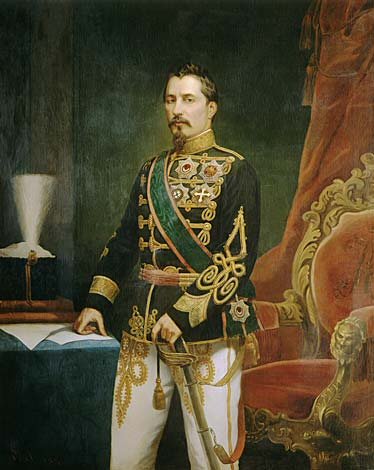
Alexandru Ioan Cuza
Although the prince spent a few time at the palace, there lived his wife, Lady Elena Cuza (1825-1909), who took care of furnishing and decorating the garden and outbuildings. She hired craftsmen to repair the building and German gardeners to restore the park around the castle. The central staircase was built of marble, the walls were covered with silk from Paris, were built fireplaces and were brought expensive chandeliers. The furniture was commissioned in 1863 in Paris. The Ruginoasa palace was officially inaugurated by Prince Cuza, during the Easter holidays from April 1864.

Went into exile in 1866 after he was forced to abdicate, Prince Cuza continued to look after the estate in Ruginoasa. He leased the estate in 1866 with 5000 ducats a year to get the money to support its exile. Meanwhile, he refused to take a capital of 500,000 francs, deposited in the the Rothschild Bank by the new leadership of the Principalities. The former ruler died on 15 May 1873 in the city of Heidelberg (Germany), and his earthly remains were brought to Ruginoasa on 29 May 1873 and were buried in a tomb near the church. His remains have been displaced several times: in 1907 were moved in the crypt of the church in a silver box located in an oak coffin, in spring 1944 were removed from the church by a soldier from Ruginoasa and moved to Curtea de Argeş, then in 1946 were moved again in a crypt in Three Hierarchs Church in Iaşi.
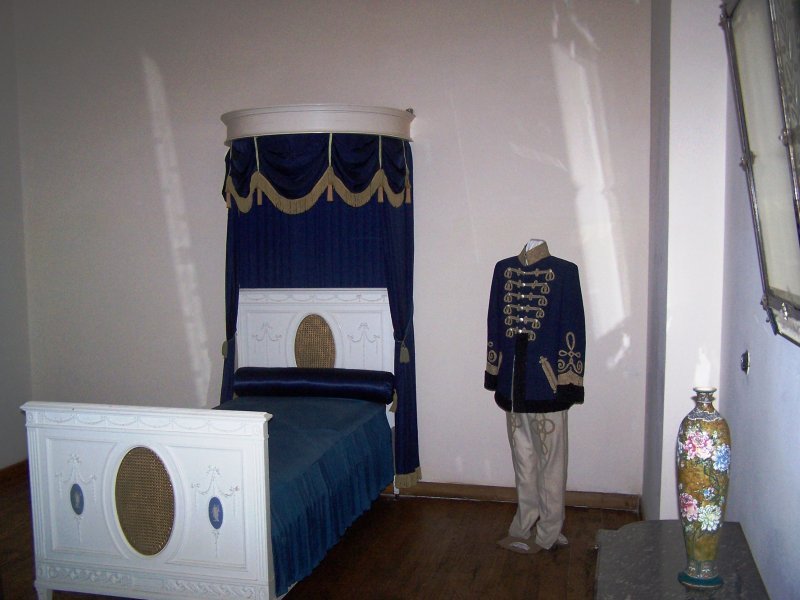
Alexandru Cuza, the son of the Prince, left the estate in Ruginoasa to his wife, Maria Moruzzi. In 1921, the palace was donated to the "Charity" Hospital for Children in Iaşi. Part of the furniture was donated to the Military Museum. In subsequent years, began the building damage, which was exacerbated by the war. The palace was badly damaged during the battles fought nearby in World War II, remaining only some enclosure walls and the ruins of the castle. It was reconstructed during 1968-1978, when was restored the palace, a part of the enclosure wall and a stronghold in the north-west. In 1982 was officially inaugurated the Memorial Museum "Alexandru Ioan Cuza", with history and ethnography sections. The palace impresses its visitors today with the stories hidden within its walls, stories that point to Ruginoasa as a cursed palace in popular belief. The superstition arose following the death (including a suicide) in the palace of several young people.



 Posts
Posts

