The project Online Communism Photo Collection was initiated as a result of an increased interest of the public towards the communist regime in Romania and because of the unavailability of the photographic sources for the respective period. The project became possible in July 2007 after the real and total opening of the archive of the communism preserved by the National Archives of Romania.
On 14th of November, 2008, the National Archives of Romania and The Institute for the Investigation of Communist Crimes in Romania, concluded an agreement of cooperation in order to bring into being the Online communism photo collection, which is the first and the largest Romanian free data base, containing photos from 1945-1989 and 1921-1944, available on the Internet.
The photos cover a vast period and a huge number of events, from inter-war period, the World War II and Ceausescu dictatorship. There are images from communists’ meetings in illegality, portraits from their youth, photos from the prisons where the communist leaders were locked. Most of the photos pertain to the period 1944-1989: the entering of the Red Army in Bucharest, the political events from 1944-1947, the visit abroad of some communist leaders, aspects from the private life of Gheorghe Gheorghiu Dej and Nicolae Ceausescu, official visits in the country, Communist Party’s conventions, cultural reunions, communist nomenclaure on different hypostasis, manifests, meetings, official portraits, public events etc.
The photos within this data base were made between 1945-1989. However, photographic documents pertaining to the Romanian communism prior to 1945 may be found. The users should understand that most of the photos from this data base were made for propaganda purpose. ANR and IICCR specify that the photos’ captions are the original ones wroted down at the time when the photos were made and do not represent the version of NAR and IICCR experts.
The Photo Collection
Showing posts with label Romania. Show all posts
Showing posts with label Romania. Show all posts

Mocăniţa
The word mocăniţă is a term of endearment, derived from the Romanian word mocan, meaning shepherd or one who lives in the mountains, and suffixed as feminine and diminutive in keeping with the tradition of naming conveyances and indicating small size. Mocăniţa is a narrow gauge railway in Romania, most notably in Transylvania and nearby regions. They are situated in mountainous areas and the locomotives operating on them (which themselves can also be referred to as mocăniţăs) are steam-powered. These railways were built for cargo and passenger services - some in the era of the Austrian-Hungarian Empire, before 1920 - but fell into disrepair over the years.

Forestry railways were widespread over Europe, especially within the Carpathian Mountains. The operating principles were very simple: following close to the river, in case of need with narrow curves (therefore the use of the narrow gauge!), and constructed to enable the small locos pulling the the empty logging cars up to the mountains and to coast down the heavy loaded trains to the saw mills.

While replaced in most of the European countries after 1945, the forestry railways in Romania survived for a long time: In 1970 the state-run forestry administration still operated more than 3.000 kms of tracks, up to 1986 still new forestry steam locos were built in Romania, and in 1989 still more than 15 forestry railway existed with together approx. 1.000 km of tracks. Some are now being rehabilitated for the purposes of tourism. Mocăniţa is one of the last remaining steam rails still in active use in Europe.

The most well-known mocăniţe:
Vasar Valley, Maramureş - 43 km long, from Vişeu de Sus to Comanu, near the Ukrainian border, though the service may terminate before then at Faina. This trip usually takes between 3 and 4 hours each way. There are two other branches: along the Novat Valley (13 km) and towards Ştevioara (3 km).
Arieş Mountains, Alba County - built in 1912; trains are now operating on Abrud to Câmpeni section of this line, that has 4 stations and 21 stops; it is planned that in the future they will run from Abrud to Turda. When operated as a non-tourist railway the journey time for the 93 kilometres trip from Turda to Abrud took some six and a half hours.

Hârtibaciu Valley, Sibiu County - from Sibiu to Agnita. This line is now designated as a historical monument, so it is saved from being scrapped and the plans to revive it may now go ahead.
Covasna County - from Covasna to Comandău - Regular journeys last occurred here in 1999, but an association was formed in 2002 to save the train and a number of trips have since been made. The inclined plane at Siclău was absolutely unbelievable, operated in the same manner as many funiculars. As soon as it could hear a wagon approaching, the resident horse shunter would appear from its box and with a little bit of persuasion shunt the wagon.
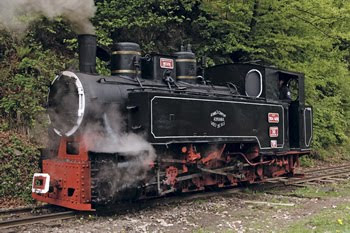
Hunedoara County - from Crişcior to Brad. The line is currently classed as a historical heritage line and used for tourism on holidays.
Mureş County - Târgu-Mureş to Band.
Moldoviţa, Suceava County - built in 1888 the German Louis Ortiep. From the 24 km of the line, there are active 4 km.
Caraş Severin County - Berzasca to Stănic, 32 km.

Photos from here.

Forestry railways were widespread over Europe, especially within the Carpathian Mountains. The operating principles were very simple: following close to the river, in case of need with narrow curves (therefore the use of the narrow gauge!), and constructed to enable the small locos pulling the the empty logging cars up to the mountains and to coast down the heavy loaded trains to the saw mills.
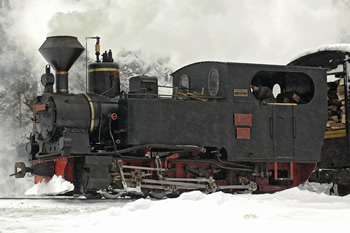
While replaced in most of the European countries after 1945, the forestry railways in Romania survived for a long time: In 1970 the state-run forestry administration still operated more than 3.000 kms of tracks, up to 1986 still new forestry steam locos were built in Romania, and in 1989 still more than 15 forestry railway existed with together approx. 1.000 km of tracks. Some are now being rehabilitated for the purposes of tourism. Mocăniţa is one of the last remaining steam rails still in active use in Europe.

The most well-known mocăniţe:
Vasar Valley, Maramureş - 43 km long, from Vişeu de Sus to Comanu, near the Ukrainian border, though the service may terminate before then at Faina. This trip usually takes between 3 and 4 hours each way. There are two other branches: along the Novat Valley (13 km) and towards Ştevioara (3 km).
Arieş Mountains, Alba County - built in 1912; trains are now operating on Abrud to Câmpeni section of this line, that has 4 stations and 21 stops; it is planned that in the future they will run from Abrud to Turda. When operated as a non-tourist railway the journey time for the 93 kilometres trip from Turda to Abrud took some six and a half hours.

Hârtibaciu Valley, Sibiu County - from Sibiu to Agnita. This line is now designated as a historical monument, so it is saved from being scrapped and the plans to revive it may now go ahead.
Covasna County - from Covasna to Comandău - Regular journeys last occurred here in 1999, but an association was formed in 2002 to save the train and a number of trips have since been made. The inclined plane at Siclău was absolutely unbelievable, operated in the same manner as many funiculars. As soon as it could hear a wagon approaching, the resident horse shunter would appear from its box and with a little bit of persuasion shunt the wagon.

Hunedoara County - from Crişcior to Brad. The line is currently classed as a historical heritage line and used for tourism on holidays.
Mureş County - Târgu-Mureş to Band.
Moldoviţa, Suceava County - built in 1888 the German Louis Ortiep. From the 24 km of the line, there are active 4 km.
Caraş Severin County - Berzasca to Stănic, 32 km.

Photos from here.
Happy National Day, Romania!


Jazz Made in Romania
Romanian-American Jazz Suite - Transylvanian Dance
Emy Drăgoi & Jazz Hot Club Romania - The Skylark
Marius Preda - Cimbalom Piece
Marian Petrescu Jazz Trio - Lacrymosa
Andrei Roşulescu & Răzvan Slama - Virtual Seasons
Romania won the GF World Cup 2010
Women national team of Romania won World Cup 2010, taking place in Aarhus, Denmark (21-26 September 2010), after great performance in final match against Olympic and European champion, Norway 24-23 (12-12). Romania's team won the GF World Cup also in 2009, after beating Norway in the final (28-27).

In the qualifying group, the national team of Romania, trained by Radu Voina, defeated the Olympic and European champion - Norway (21-20), crushed the World champion - Russia (32-24), and drawed with Sweden (27-27). Romania beat France 23-21 (15-7) in the semifinal.
The Romanian Cristina Neagu was the GF World Cup's MVP.

In the qualifying group, the national team of Romania, trained by Radu Voina, defeated the Olympic and European champion - Norway (21-20), crushed the World champion - Russia (32-24), and drawed with Sweden (27-27). Romania beat France 23-21 (15-7) in the semifinal.
The Romanian Cristina Neagu was the GF World Cup's MVP.
Romania at World Cup
The World Football Championship was created at the initiative of FIFA president Jules Rimet after successful football tournament at the Olympics. On May 28, 1928, the FIFA Congress in Amsterdam decided to Uruguay to conduct the first such competition. The national football team of Romania has participated at seven World Cup final tournaments.
Uruguay, 1930
The first World Football Championship, Copa del Mundo (World Cup), was hosted by Uruguay, Olympic champion in 1924 and 1928, which in 1930 celebrated one hundred years of independence. There were no preliminaries, all national football teams received invitations to participate. Romania was the first European country to announce its participation in the tournament. The 13 national teams were distributed in 4 groups, the winners of each group qualifying in semi-finals. Romania was in the 3rd group, along with Peru and Uruguay.
Peru - Romania 1-3 (for Romania scored Adalbert Deşu 1' - the fastest goal of the competition, Constantin Stanciu, Ştefan Barbu 85')
Uruguay - Romania 4-0
Uruguay won the World Cup, Romania was on the 8th place.

Italy, 1934
Romania was qualified in a group with Swiss and Yugoslavia. In the eighths, Romania was defeated by Czechoslovakia, the finalist of the competition.
Czechoslovakia - Romania 2-1 (Puc, Nejedly - Ştefan Dobay)
Italy won the World Cup, Romania was on the 12th place.

England - Romania 1-0 (Geoff Hurst)
Czechoslovakia - Romania 1-2 (Ladislav Petráš - Alexandru Neagu, Florea Dumitrache)
Brazil - Romania 3-2 (Pelé twice, Jairzinho - Florea Dumitrache, Emerich Dembrowski)
Brazil won the World Cup, Romania was on the 11th place.

Italy, 1990
Romania was in a group along with Argentina (the world champion), USSR (the vice-european champion), and Cameroon.
USSR - Romania 0-2 (Marius Lăcătuş twice)
Cameroon - Romania 2-0 (Roger Milla twice)
Argentina - Romania 1-1 (Pedro Monzón - Gavrilă Balint)
Second round
Ireland - Romania 0-0 (Ireland qualified at penalty shots)
West Germany won the World Cup.

USA, 1994
Romania was in a group along with Colombia, Switzerland, and USA.
Colombia - Romania 1-3 (Adolfo Valencia - Florin Radu Răducioiu twice, Gheorghe Hagi)
Switzerland - Romania 4-1
USA - Romania 0-1 (Dan Petrescu)
Round of 8
Argentina - Romania 2-3 (Gabriel Batistuta, Abel Balbo - Ilie Dumitrescu twice, Gheorghe Hagi)
Quarter-finals
Sweden - Romania 2-2 (Brolin, Roland Nilsson - Florin Radu Răducioiu twice). Sweden qualified at penalty shots.
Brazil won the World Cup, Romania was on the 6th place.

France, 1998
Romania was in a group along with Colombia, England, and Tunisia.
Colombia - Romania 0-1 (Adrian Ilie)
England - Romania 1-2 (Michael Owen - Viorel Moldovan, Dan Petrescu)
Tunisia - Romania 1-1 (Skander Souayah - Viorel Moldovan)
Round of 16
Croatia - Romania 2-0 (Davor Šuker twice)
France won the World Cup, Romania was on the 11th place.

Uruguay, 1930
The first World Football Championship, Copa del Mundo (World Cup), was hosted by Uruguay, Olympic champion in 1924 and 1928, which in 1930 celebrated one hundred years of independence. There were no preliminaries, all national football teams received invitations to participate. Romania was the first European country to announce its participation in the tournament. The 13 national teams were distributed in 4 groups, the winners of each group qualifying in semi-finals. Romania was in the 3rd group, along with Peru and Uruguay.
Peru - Romania 1-3 (for Romania scored Adalbert Deşu 1' - the fastest goal of the competition, Constantin Stanciu, Ştefan Barbu 85')
Uruguay - Romania 4-0
Uruguay won the World Cup, Romania was on the 8th place.

Jules Rimet Cup
Italy, 1934
Romania was qualified in a group with Swiss and Yugoslavia. In the eighths, Romania was defeated by Czechoslovakia, the finalist of the competition.
Czechoslovakia - Romania 2-1 (Puc, Nejedly - Ştefan Dobay)
Italy won the World Cup, Romania was on the 12th place.

Ştefan Dobay
France, 1938
Romania qualified by default for the 1938 World Cup after their qualifying playoff opponents Egypt withdrew. They suffered a shock defeat in the finals in France, losing to minnows Cuba, who, like Romania, had only qualified due to the withdrawal of their qualifying opponents, USA. The first match at the Stade Chapou in Toulouse ended 3–3 after extra time, but Cuba won the replay four days later 2–1.
Italy won the World Cup, Romania was on the 11th place.
Mexico, 1970
Romania was in Group 3 with England, Brazil and Czechoslovakia.England - Romania 1-0 (Geoff Hurst)
Czechoslovakia - Romania 1-2 (Ladislav Petráš - Alexandru Neagu, Florea Dumitrache)
Brazil - Romania 3-2 (Pelé twice, Jairzinho - Florea Dumitrache, Emerich Dembrowski)
Brazil won the World Cup, Romania was on the 11th place.

Florea Dumitrache
Romania was in a group along with Argentina (the world champion), USSR (the vice-european champion), and Cameroon.
USSR - Romania 0-2 (Marius Lăcătuş twice)
Cameroon - Romania 2-0 (Roger Milla twice)
Argentina - Romania 1-1 (Pedro Monzón - Gavrilă Balint)
Second round
Ireland - Romania 0-0 (Ireland qualified at penalty shots)
West Germany won the World Cup.

Gheorghe Hagi
USA, 1994
Romania was in a group along with Colombia, Switzerland, and USA.
Colombia - Romania 1-3 (Adolfo Valencia - Florin Radu Răducioiu twice, Gheorghe Hagi)
Switzerland - Romania 4-1
USA - Romania 0-1 (Dan Petrescu)
Round of 8
Argentina - Romania 2-3 (Gabriel Batistuta, Abel Balbo - Ilie Dumitrescu twice, Gheorghe Hagi)
Quarter-finals
Sweden - Romania 2-2 (Brolin, Roland Nilsson - Florin Radu Răducioiu twice). Sweden qualified at penalty shots.
Brazil won the World Cup, Romania was on the 6th place.

Florin Radu Răducioiu
France, 1998
Romania was in a group along with Colombia, England, and Tunisia.
Colombia - Romania 0-1 (Adrian Ilie)
England - Romania 1-2 (Michael Owen - Viorel Moldovan, Dan Petrescu)
Tunisia - Romania 1-1 (Skander Souayah - Viorel Moldovan)
Round of 16
Croatia - Romania 2-0 (Davor Šuker twice)
France won the World Cup, Romania was on the 11th place.

Viorel Moldovan
Romania

The outline map of Romania...

... and an outstanding cloud!
Images from www.diseara.ro and Clker.com
Centaurea pugioniformis
Centaurea pugioniformis is a plant that can be found only in Romania, is endemic in several areas of the country. Centaurea is a genus of at least some 500 to 600 species of herbaceous thistle-like flowering plants in the family Asteraceae. Common names for this genus are starthistles, knapweeds, centaureas and the more ambiguous "bluets". "Cornflowers" is used for a few species, including Centaurea pugioniformis.


Images from My Nature
Taxonomy
Kingdom: Plantae
Phylum: Spermatophyta
Class: Dicotyledones
Division: Magnoliophyta Magnoliophytina
Class: Magnoliopsida
Order: Asterales
Family: Asteraceae
Genus: Centaurea
Species: pugioniformis
Scientific name: Centaurea pugioniformis E.I.Nyarady


Taxonomy
Kingdom: Plantae
Phylum: Spermatophyta
Class: Dicotyledones
Division: Magnoliophyta Magnoliophytina
Class: Magnoliopsida
Order: Asterales
Family: Asteraceae
Genus: Centaurea
Species: pugioniformis
Scientific name: Centaurea pugioniformis E.I.Nyarady
Turks in Romania
The Turks (Romanian: Turci) are an ethnic minority in Romania, numbering 32,596 people according to the 2002 census and hence making up 0.2% of the total population. The majority of Turks live in the historical region of Northern Dobruja (Turkish: Dobruca), particularly in Constanţa County, where they number 24,246 and make up 3.4% of the population, Tulcea County with 3,334 (1.3%) and Bucharest with 2,473 (0.1%). As an officially-recognised ethnic minority, Turks have one seat reserved for them in the Romanian Chamber of Deputies.

As the entire Balkan Peninsula become an integral part of the emerging Ottoman Empire (a process which concluded with the fall of Constantinople to Sultan Mehmed II in 1453), Wallachia became engaged in frequent confrontations and, in the final years of Mircea the Elder's reign, became an Ottoman subject. In the two Danubian Principalities, Ottoman suzerainty had an overall reduced impact on the local population, and the impact of Islam was itself much reduced. Wallachia and Moldavia enjoyed a large degree of autonomy, and their history was punctuated by episodes of revolt and momentary independence. After 1417, when Ottoman domination over Wallachia first became effective, the towns of Turnu and Giurgiu were annexed as kazas, a rule enforced until the Treaty of Adrianople in 1829 (the status was briefly extended to Brăila in 1542). Alongside Dobruja, a part of present-day Romania under direct Ottoman rule in 1551-1718 was the Eyalet of Temeşvar (the Banat region of western Romania), which extended as far as Arad (1551-1699) and Oradea (1661-1699). The few thousand Muslims settled there were, however, driven out by Habsburg conquest. The presence of Muslims in the two Danubian Principalities was also attested, centering on Turkish traders and small communities of Muslim Roma. It is also attested that, during later Phanariote rules and the frequent Russo-Turkish Wars, Ottoman troops were stationed on Wallachia's territory.

Islam in Romania is followed by only 0.3 percent of population, but has 700 years of tradition in Northern Dobruja, a region on the Black Sea coast which was part of the Ottoman Empire for almost five centuries (ca. 1420-1878). According to tradition, Islam was first established locally around Sufi leader Sari Saltik during the Byzantine epoch. The Islamic presence in Northern Dobruja was expanded by Ottoman overseeing and successive immigration, but has been in steady decline since the late 19th century. After Northern Dobruja became part of Romania following the Russo-Turkish War of 1877–1878, the community preserved its self-determining status. This changed during the communist regime, when Romanian Muslims were subject to a measure of supervision by the state, but the group again emancipated itself after the Romanian Revolution of 1989. Its interests are represented by the Muftiyat (Muftiyatul Cultului Musulman din România), which was created as the reunion of two separate such institutions. The Islamic religion is one of the 16 rites awarded state recognition.

As the entire Balkan Peninsula become an integral part of the emerging Ottoman Empire (a process which concluded with the fall of Constantinople to Sultan Mehmed II in 1453), Wallachia became engaged in frequent confrontations and, in the final years of Mircea the Elder's reign, became an Ottoman subject. In the two Danubian Principalities, Ottoman suzerainty had an overall reduced impact on the local population, and the impact of Islam was itself much reduced. Wallachia and Moldavia enjoyed a large degree of autonomy, and their history was punctuated by episodes of revolt and momentary independence. After 1417, when Ottoman domination over Wallachia first became effective, the towns of Turnu and Giurgiu were annexed as kazas, a rule enforced until the Treaty of Adrianople in 1829 (the status was briefly extended to Brăila in 1542). Alongside Dobruja, a part of present-day Romania under direct Ottoman rule in 1551-1718 was the Eyalet of Temeşvar (the Banat region of western Romania), which extended as far as Arad (1551-1699) and Oradea (1661-1699). The few thousand Muslims settled there were, however, driven out by Habsburg conquest. The presence of Muslims in the two Danubian Principalities was also attested, centering on Turkish traders and small communities of Muslim Roma. It is also attested that, during later Phanariote rules and the frequent Russo-Turkish Wars, Ottoman troops were stationed on Wallachia's territory.

Islam in Romania is followed by only 0.3 percent of population, but has 700 years of tradition in Northern Dobruja, a region on the Black Sea coast which was part of the Ottoman Empire for almost five centuries (ca. 1420-1878). According to tradition, Islam was first established locally around Sufi leader Sari Saltik during the Byzantine epoch. The Islamic presence in Northern Dobruja was expanded by Ottoman overseeing and successive immigration, but has been in steady decline since the late 19th century. After Northern Dobruja became part of Romania following the Russo-Turkish War of 1877–1878, the community preserved its self-determining status. This changed during the communist regime, when Romanian Muslims were subject to a measure of supervision by the state, but the group again emancipated itself after the Romanian Revolution of 1989. Its interests are represented by the Muftiyat (Muftiyatul Cultului Musulman din România), which was created as the reunion of two separate such institutions. The Islamic religion is one of the 16 rites awarded state recognition.
Tatars in Romania
Tatars (Romanian: Tătari) were present on the territory of today's Romania since the 13th century. According to the 2002 census, 24,000 people declared their nationality as Tatar, most of them being Crimean Tatars living in Constanţa County. They are the main factor of Islam in Romania.

The Tatars first reached the mouths of the Danube in the mid-13th century at the height of power of the Golden Horde. In 1241, under the leadership of Kadan, the Tatars crossed the Danube, conquering and devastating the region. The region was probably not under the direct rule of the Horde, but rather, a vassal of the Bakhchisaray Khan. It is known from Arab sources that at the end of the 13th century and the beginning of the 14th century that descendants of the Nogai Horde settled in Isaccea. Another Arab scholar, Ibn Battuta, who passed through the region in 1330-1331, talks about Baba Saltuk (Babadag) as the southernmost town of the Tatars. The Golden Horde began to lose its influence after the wars of 1352-1359 and at the time, a Tatar warlord, Demetrius is noted defending the cities of the Mouths of the Danube. Toward the end of the 16th century, about 30,000 Nogai Tatars from the Budjak were brought to Dobruja. Nogai Tatars consider themselves as descended of the people of the Golden Horde and they take their name from Nogai Khan, the grandson of Genghis Khan.

Crimean Tatars were brought to Dobruja by the Ottomans following the increasing power of the Russians in the region and its annexation of Crimea in 1783. After the Russian annexation of Crimea in 1783, Crimean Tatars began emigrating to the Ottoman coastal provinces of Dobruja (today divided between Romania and Bulgaria). However, after the independence of Romania in 1877-1878, between 80,000 and 100,000 Crimean Tatars moved to Anatolia, a migration which continued afterward. As such, the number of Tatars in Northern Dobruja decreased from 21% in 1880 to 5.6% in 1912. In 2002, they formed 2.4% of the population of this region. The Nogai component of the Tatar population are not separately enumerated in Romanian censuses. Most have emigrated to Turkey but it is estimated that a few thousand Nogais still live in Dobruja, notably in the town of Mihail Kogălniceanu (Karamurat) and villages of Lumina (Kocali), Valea Dacilor (Hendekkarakuyusu) and Cobadin (Kubadin).

Between 1947-1957 Tatar schools began operating in Romania and in 1955 a special alphabet was created for the Tatar community. In 1990 the Democratic Union of Muslim Tatar-Turks was established. Currently Romania respects the minority rights of Tatars and does not follow any policy of Romanianization.

The Tatars first reached the mouths of the Danube in the mid-13th century at the height of power of the Golden Horde. In 1241, under the leadership of Kadan, the Tatars crossed the Danube, conquering and devastating the region. The region was probably not under the direct rule of the Horde, but rather, a vassal of the Bakhchisaray Khan. It is known from Arab sources that at the end of the 13th century and the beginning of the 14th century that descendants of the Nogai Horde settled in Isaccea. Another Arab scholar, Ibn Battuta, who passed through the region in 1330-1331, talks about Baba Saltuk (Babadag) as the southernmost town of the Tatars. The Golden Horde began to lose its influence after the wars of 1352-1359 and at the time, a Tatar warlord, Demetrius is noted defending the cities of the Mouths of the Danube. Toward the end of the 16th century, about 30,000 Nogai Tatars from the Budjak were brought to Dobruja. Nogai Tatars consider themselves as descended of the people of the Golden Horde and they take their name from Nogai Khan, the grandson of Genghis Khan.

Crimean Tatars were brought to Dobruja by the Ottomans following the increasing power of the Russians in the region and its annexation of Crimea in 1783. After the Russian annexation of Crimea in 1783, Crimean Tatars began emigrating to the Ottoman coastal provinces of Dobruja (today divided between Romania and Bulgaria). However, after the independence of Romania in 1877-1878, between 80,000 and 100,000 Crimean Tatars moved to Anatolia, a migration which continued afterward. As such, the number of Tatars in Northern Dobruja decreased from 21% in 1880 to 5.6% in 1912. In 2002, they formed 2.4% of the population of this region. The Nogai component of the Tatar population are not separately enumerated in Romanian censuses. Most have emigrated to Turkey but it is estimated that a few thousand Nogais still live in Dobruja, notably in the town of Mihail Kogălniceanu (Karamurat) and villages of Lumina (Kocali), Valea Dacilor (Hendekkarakuyusu) and Cobadin (Kubadin).

Between 1947-1957 Tatar schools began operating in Romania and in 1955 a special alphabet was created for the Tatar community. In 1990 the Democratic Union of Muslim Tatar-Turks was established. Currently Romania respects the minority rights of Tatars and does not follow any policy of Romanianization.
Cottus transsilvaniae
Cottus is a genus of the sculpin family Cottidae. It is often referred to as the "freshwater sculpins", as the principle genus of sculpins to be found in fresh water. They are mostly small fish, rarely reaching more than 15 cm in length. A recently described sculpin is Cottus transsilvaniae (Freyhof, Kottelat & Nolte, 2005), a species endemic to Romania.

Kingdom: Animalia
Phylum: Chordata
Class: Actinopterygii
Order: Scorpaeniformes
Family: Cottidae
Genus: Cottus
Species: Cottus transsilvaniae
Size / Weight / Age: Max length : 9.7 cm SL male/unsexed;
Environment: Benthopelagic; freshwater
Climate / Range: Temperate
Distribution: Europe: Danube basin in Romania. Found only in the upper river Argeş. May occur in other tributaries of lower Danube.
Short description:
Anal soft rays: 12 - 13. Can be distinguished from other species of Cottus in the Danube drainage by the combination of the following characters: dorsal head length 19-20% SL; 12-13 1/2 anal-fin rays; 18-19 1/2 rays in second dorsal fin; predorsal length 29-30% SL; distance from tip of snout to origin of second dorsal fin 47-50% SL; no distinct transverse bands on pelvic fin; no prickling on body.

Kingdom: Animalia
Phylum: Chordata
Class: Actinopterygii
Order: Scorpaeniformes
Family: Cottidae
Genus: Cottus
Species: Cottus transsilvaniae
Size / Weight / Age: Max length : 9.7 cm SL male/unsexed;
Environment: Benthopelagic; freshwater
Climate / Range: Temperate
Distribution: Europe: Danube basin in Romania. Found only in the upper river Argeş. May occur in other tributaries of lower Danube.
Short description:
Anal soft rays: 12 - 13. Can be distinguished from other species of Cottus in the Danube drainage by the combination of the following characters: dorsal head length 19-20% SL; 12-13 1/2 anal-fin rays; 18-19 1/2 rays in second dorsal fin; predorsal length 29-30% SL; distance from tip of snout to origin of second dorsal fin 47-50% SL; no distinct transverse bands on pelvic fin; no prickling on body.


The Romanian Loach
The Romanian Loach (Sabanejewia romanica) is a species of ray-finned fish in the Cobitidae family, found only in Romania. It was originally placed in the genus Cobitis.
Kingdom: Animalia
Phylum: Chordata
Class: Actinopterygii
Order: Cypriniformes
Family: Cobitidae
Subfamily: Cobitinae
Genus: Sabanejewia
Species: S. romanica
Binomial name: Sabanejewia romanica(Băcescu, 1943)
Synonyms: Cobitis caspia romanica, Cobitis romanica

Max length : 10.5 cm male/unsexed; 12 cm female
Environment: Benthopelagic; freshwater
Climate / Range Temperate; 10°C - 18°C; 49°N - 43°N, 23°E - 29°E
Distribution: Europe: Upper and middle reach of some Danube tributaries in Romania. It is found only in Romania.
Resilience: High, minimum population doubling time less than 15 months (Preliminary K or Fecundity.)
Vulnerability: Low vulnerability (15 of 100)
IUCN Red List Status: Near Threatened (NT)
Kingdom: Animalia
Phylum: Chordata
Class: Actinopterygii
Order: Cypriniformes
Family: Cobitidae
Subfamily: Cobitinae
Genus: Sabanejewia
Species: S. romanica
Binomial name: Sabanejewia romanica(Băcescu, 1943)
Synonyms: Cobitis caspia romanica, Cobitis romanica

Max length : 10.5 cm male/unsexed; 12 cm female
Environment: Benthopelagic; freshwater
Climate / Range Temperate; 10°C - 18°C; 49°N - 43°N, 23°E - 29°E
Distribution: Europe: Upper and middle reach of some Danube tributaries in Romania. It is found only in Romania.
Resilience: High, minimum population doubling time less than 15 months (Preliminary K or Fecundity.)
Vulnerability: Low vulnerability (15 of 100)
IUCN Red List Status: Near Threatened (NT)
Unique plants from Romania (Part 3)
Another flower from the Dianthus family (suprataxon: Caryophyllaceae [verbatim]), Dianthus spiculifolius (Romanian: Garofiţa albă de stânci or Barba ungurului, English: rocks white carnation or Beard of the Hungarian) is an elegant plant that grows on limestone rocks, in upland up to the alpine areas. It grows as a bush, with many stems, the flowers are white or pale pink. The leaves are linear, up to 2-3 mm thin and the petals are ragged. It blooms in May-July and has an extraordinary, exquisite perfume.

Image from MyNature, © Beniamin Boceanu
Listed as Dianthus spiculifolius Schur. (1866), this splendid flower is a rare, endemic species who grows in a few restricted areas in the Romanian Carpathians Mountains.


Images from Alpinet, © Daniel Morar, Csaba Iakob

Listed as Dianthus spiculifolius Schur. (1866), this splendid flower is a rare, endemic species who grows in a few restricted areas in the Romanian Carpathians Mountains.


Unique plants from Romania (Part 1)
Blue Jewel Hepatica (Hepatica transsilvanica)
Hepatica is a genus of herbaceous perennial plants belonging to the buttercup family, Ranunculaceae. A native of central and northern Europe, Asia and northeastern North America, Hepatica is sometimes called liverleaf or liverwort. It should not be confused with liverworts, which may also be called "Hepaticae". Some botanists include Hepatica within a wider interpretation of Anemone. Hepatica nobilis is the common Hepatica, but Hepatica transsilvanica can be found only in Romania (in Carpathian Mountains and Transylvania). In Romania, this unique plant is named crucea voinicului (English: the cross of the powerful). Masses of starry deep-blue flowers provide rich decoration in early spring over evergreen, mats of leathery, deep-green, tri-lobed foliage.

Photo from MyNature, © Andrei Lenard
Hepatica is a genus of herbaceous perennial plants belonging to the buttercup family, Ranunculaceae. A native of central and northern Europe, Asia and northeastern North America, Hepatica is sometimes called liverleaf or liverwort. It should not be confused with liverworts, which may also be called "Hepaticae". Some botanists include Hepatica within a wider interpretation of Anemone. Hepatica nobilis is the common Hepatica, but Hepatica transsilvanica can be found only in Romania (in Carpathian Mountains and Transylvania). In Romania, this unique plant is named crucea voinicului (English: the cross of the powerful). Masses of starry deep-blue flowers provide rich decoration in early spring over evergreen, mats of leathery, deep-green, tri-lobed foliage.

Herta Müller - Nobel 2009
Herta Müller (born 17 August 1953) is a Romanian-born German novelist, poet and essayist noted for her works depicting the harsh conditions of life in Communist Romania under the repressive Nicolae Ceauşescu regime, the history of the Germans in Banat, and the persecution of Romanian ethnic Germans by Stalinist Soviet occupying forces in Romania.

She was born in August 1953 in the German-speaking village of Niţchidorf (German: Nitzkydorf), in the Banat district of Romania. The daughter of Banat Swabian farmers, her family was part of Romania's German minority; her father had served in the Waffen SS and her mother survived five years (1944-1949) in a slave labour camp in the Soviet Union during and after World War II. While she speaks German as a native language, she is also fluent in Romanian. Hertha left her village to study German and Romanian literature at the University of Timişoara. Here she became part of the Aktionsgruppe Banat (Campaign Group Banat), a group of idealistic Romanian-German writers seeking freedom of expression under the Ceauşescu dictatorship.

After her studies she was employed as a translator in a machine factory. Contacted by intermediaries of the Romanian Secret Service (Securitate), she strictly refused any collaboration which led to her losing her job in the factory. The Secret Service expected to get information from her about the Aktionsgruppe Banat, of which she was a member. During this period, she began writing her first stories which she collected under the title of 'Niederungen', but she had difficulty satisfying the censors, and this work was not published until 1982, and then in radically modified form.

In 1984, 'Niederungen' was published in Germany in an uncensored version. Awards and invitations to Germany followed. Although Herta Müller hadn’t had the permission to leave Romania as yet, traveling became possible for her hereupon. She even achieved an employment as teacher shortly before. After she had criticized severely the Ceauşescu dictatorship in interviews, however, a publication and traveling ban was imposed on her – culminating in death threats by the Secret Service. In 1987, she left Romania with her husband, novelist Richard Wagner and since then they lived in Berlin. Over the following years she received many lectureships at universities in Germany and abroad. She currently lives in Berlin. Müller received membership of the German Academy for Writing and Poetry in 1995, and other positions followed. Beside the prizes for her debut (among others the 'aspekte Literaturpreis'), she received many awards, such as Kleist, Aristeion, Würth, Impac, Cicero, and many others.

Herta Müller was nominated for the Nobel Prize for Literature in 1999 and 2009. The Swedish Academy awarded the 2009 Nobel Prize in Literature to Müller "who, with the concentration of poetry and the frankness of prose, depicts the landscape of the dispossessed".

She was born in August 1953 in the German-speaking village of Niţchidorf (German: Nitzkydorf), in the Banat district of Romania. The daughter of Banat Swabian farmers, her family was part of Romania's German minority; her father had served in the Waffen SS and her mother survived five years (1944-1949) in a slave labour camp in the Soviet Union during and after World War II. While she speaks German as a native language, she is also fluent in Romanian. Hertha left her village to study German and Romanian literature at the University of Timişoara. Here she became part of the Aktionsgruppe Banat (Campaign Group Banat), a group of idealistic Romanian-German writers seeking freedom of expression under the Ceauşescu dictatorship.

After her studies she was employed as a translator in a machine factory. Contacted by intermediaries of the Romanian Secret Service (Securitate), she strictly refused any collaboration which led to her losing her job in the factory. The Secret Service expected to get information from her about the Aktionsgruppe Banat, of which she was a member. During this period, she began writing her first stories which she collected under the title of 'Niederungen', but she had difficulty satisfying the censors, and this work was not published until 1982, and then in radically modified form.

In 1984, 'Niederungen' was published in Germany in an uncensored version. Awards and invitations to Germany followed. Although Herta Müller hadn’t had the permission to leave Romania as yet, traveling became possible for her hereupon. She even achieved an employment as teacher shortly before. After she had criticized severely the Ceauşescu dictatorship in interviews, however, a publication and traveling ban was imposed on her – culminating in death threats by the Secret Service. In 1987, she left Romania with her husband, novelist Richard Wagner and since then they lived in Berlin. Over the following years she received many lectureships at universities in Germany and abroad. She currently lives in Berlin. Müller received membership of the German Academy for Writing and Poetry in 1995, and other positions followed. Beside the prizes for her debut (among others the 'aspekte Literaturpreis'), she received many awards, such as Kleist, Aristeion, Würth, Impac, Cicero, and many others.

Herta Müller was nominated for the Nobel Prize for Literature in 1999 and 2009. The Swedish Academy awarded the 2009 Nobel Prize in Literature to Müller "who, with the concentration of poetry and the frankness of prose, depicts the landscape of the dispossessed".
Official Promos
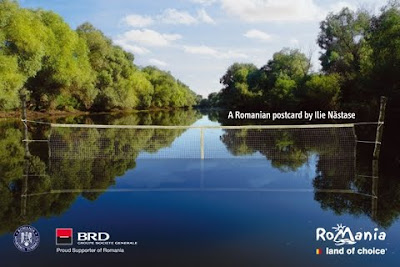
The official promos for the campaign "Romania - Land of Choice" released by the Romanian Ministry of Tourism.




Valeriu Lazarov
Valeriu Lazarov (also known as Valerio Lazarov; December 20, 1935, Bârlad, Romania - August 11, 2009, Madrid, Spain), was a well-known TV producer, director, writer, actor.

He made his debut at the Romanian public television, then went to Spain, where he received Spanish citizenship in 1972. In 1979, Lazarov reached the Italian national TV channel, RAI, to produce a series of shows, called "Tilt". Shortly after, he started working for Silvio Berlusconi at Canale 5, where he became production director, president of the administration board and director of the production center Videotime. In 1985 he got back to Spain, where he worked as producer at the Spanish National Television, as well as general manager and delegate adviser to TV station Telcinco, till 1994, when he was replaced by Maurizio Carlotti. In 1995 he set up his own production company, Prime Time Communications.
Lazarov revolutionized TV entertainment shows in Romania at the end of the 1990s, producing successful shows, such as "Surprises, surprises", "Out of Love" or "The Star Rain" and many soap operas. Lazarov is called by the international press "one of the most respected TV professionals and part of the vanguard of his times". Highly respected in Romania and Spain, Lazarov was nicknamed “Mister Zoom” for the way he maneuvered TV cameras.

He made his debut at the Romanian public television, then went to Spain, where he received Spanish citizenship in 1972. In 1979, Lazarov reached the Italian national TV channel, RAI, to produce a series of shows, called "Tilt". Shortly after, he started working for Silvio Berlusconi at Canale 5, where he became production director, president of the administration board and director of the production center Videotime. In 1985 he got back to Spain, where he worked as producer at the Spanish National Television, as well as general manager and delegate adviser to TV station Telcinco, till 1994, when he was replaced by Maurizio Carlotti. In 1995 he set up his own production company, Prime Time Communications.
Lazarov revolutionized TV entertainment shows in Romania at the end of the 1990s, producing successful shows, such as "Surprises, surprises", "Out of Love" or "The Star Rain" and many soap operas. Lazarov is called by the international press "one of the most respected TV professionals and part of the vanguard of his times". Highly respected in Romania and Spain, Lazarov was nicknamed “Mister Zoom” for the way he maneuvered TV cameras.
Subscribe to:
Posts (Atom)


 Posts
Posts

